

 English
  Español
 Content
- 1 What a textile chemicals and auxiliaries supplier is actually responsible for
- 2 Where auxiliary categories enter your production line
- 3 Eight questions to ask a textile chemicals and auxiliaries supplier before approval
- 4 A five-step plan to qualify a new supplier
- 5 Functional finishes and the documentation behind them
- 6 Frequently asked questions about textile chemicals and auxiliaries suppliers
A polyester knit dyehouse in Shaoxing had run the same disperse dye recipe for two years. When purchasing switched to a lower-priced leveling agent, the first three batches showed visible barrel marks, and 11 percent of the yardage had to be stripped and redyed. The data sheet looked identical: same ionic character, same pH range, same solids. The failure appeared only under dyeing conditions, when dispersion stability collapsed at 130 degrees Celsius. For a buyer comparing textile chemicals and auxiliaries suppliers, the lesson is direct: the data sheet rarely shows the behavior that matters under process stress.
That is the real risk in sourcing from textile chemicals and auxiliaries suppliers. What looks like a commodity purchase is actually a process decision. The supplier you approve determines levelness, fastness, hand feel, rework rates, and compliance months after the invoice is paid. The useful question is not price per kilogram, but which supplier can hold formulation, process fit, and batch consistency stable across years of deliveries.
What a textile chemicals and auxiliaries supplier is actually responsible for
A textile chemicals and auxiliaries supplier is responsible for three variables: the chemical formulation, the compatibility of that formulation with your process, and the consistency of every batch delivered to your warehouse.
The formulation is the active core: the leveling polymer, the surfactant package, the pH buffer, or the fluorine-free polymer that creates the effect. The same active substance can be formulated very differently, and the difference shows in emulsion stability, foaming behavior, and thermosensitivity. A leveling agent that performs cleanly in a beaker can fail in a jet dyeing machine under shear stress and high temperature.
A useful working definition keeps the evaluation focused:
Textile auxiliaries are process and finishing chemicals applied to textile materials to control wettability, levelness, dye fixation, hand feel, waterproofness, and other functional or aesthetic properties. They do not enter the fiber structure, but they decide whether the fabric meets its target.
Process fit is the second variable. Every mill differs in water hardness, steam quality, machinery, and time scheduling. A supplier that asks for your water analysis and equipment list before recommending a product is ready for the day a fault appears. The third variable is batch consistency: auxiliary production depends on raw material lots, and a disciplined manufacturer revalidates the finished product whenever an input changes.
Where auxiliary categories enter your production line
Each auxiliary category acts at a different stage, and the range a supplier covers determines how much of your line can rely on one partner. Auxiliaries from a single process-oriented manufacturer are designed to work in the same bath; mixing products from several sources raises the risk of precipitation, foaming, and shade drift.
| Stage | Auxiliary types | Function |
| Pre-treatment and washing | Degreasers, scouring agents, wetting agents | Remove knitting oils, spin finishes, and heavy soiling |
| Dyeing | Leveling agents, dispersing agents, carriers | Control dye exhaustion for a uniform shade |
| After dyeing | Fixing agents, washing-off agents | Improve wash fastness and remove hydrolyzed dye |
| Finishing and functionalization | Softeners, water repellents, UV absorbers | Adjust hand feel and add certified performance |
Suppliers that specialize in dyeing and finishing auxiliaries, such as Hubei Zezhuang Technology Industrial Development Co., Ltd. (Zezhuang Technology), structure their product line around these stages. For oil-stained polyester knitgoods, a heavy-duty degreaser such as ZZ6106H removes silicone and knitting oils before dyeing. For disperse dyeing on polyester, a high-temperature leveling agent such as ZZ1280B slows dye exhaustion and stabilizes the dispersion, reducing barrel marks.
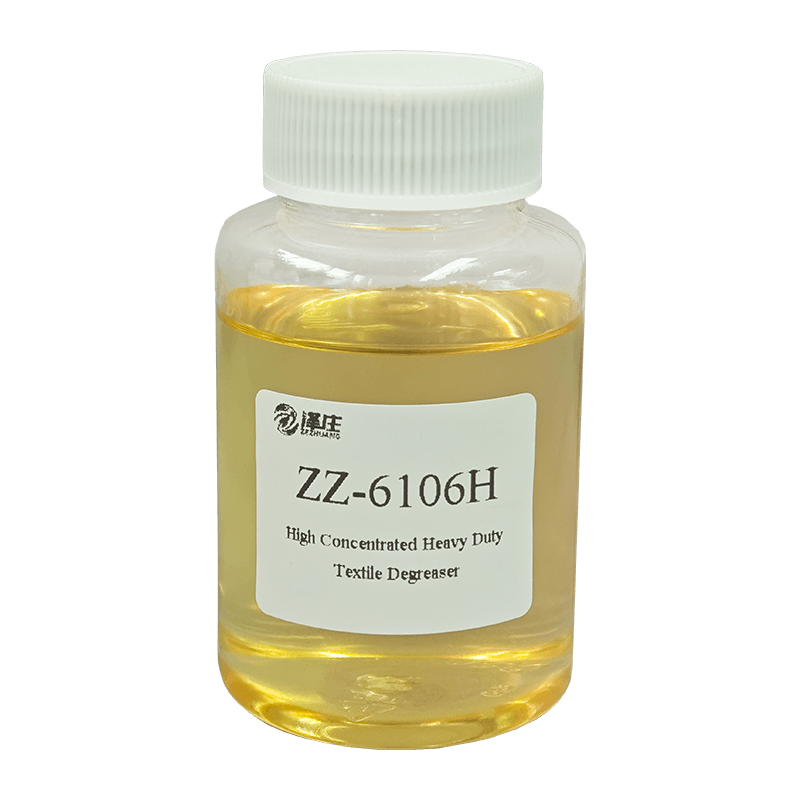 ZZ-6106H High-Concentration Heavy-Duty Degreaser for TextilesThis degreaser works at 70–100°C and can be used in the same bath as nylon dyeing. It suits oil-stained polyester knitgoods, offering strong cleaning and desizing without fiber damage.View Product →
 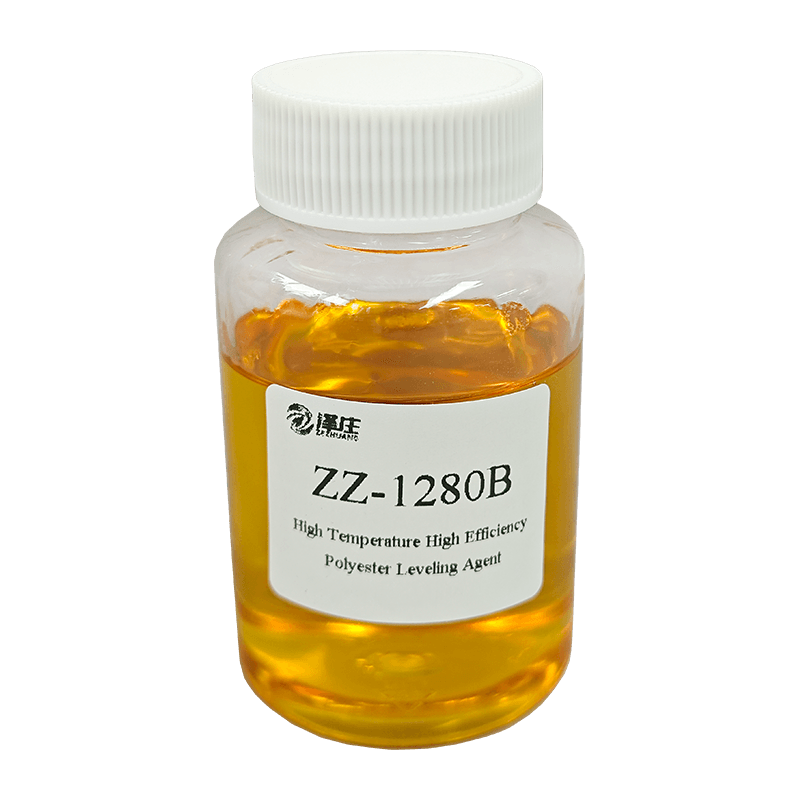 ZZ-1280B High-Temperature Leveling Agent for Polyester DyeingA low-foam dispersing leveling and shade repairing agent for high-temperature dyeing of polyester and blends. It slows dye exhaustion and stabilizes dispersion, reducing barrel marks.View Product →
The fastest way to predict a supplier's behavior is to watch how it answers a technical question. Two profiles emerge:
Price-led supplier
- Sells by brand name without asking about your process
- Provides a one-page SDS and little else
- Changes raw material sources without notice
- Responds to claims after the lot is already ruined
Process partner supplier
- Requests fiber, machinery, and water profiles before recommending
- Provides application data, trial samples, and on-site support
- Notifies formulation changes and revalidates performance
- Runs root-cause analysis with your team
Eight questions to ask a textile chemicals and auxiliaries supplier before approval
Every auxiliary purchase should begin with a technical audit, not a price negotiation. These eight questions separate suppliers that understand your process from those that only move drums.
- Which fiber types, machinery, and process conditions is this product designed for?
- What is the effective pH range, temperature window, and dosage curve?
- How does the formulation behave in hard water or with residual metal ions?
- Which auxiliaries are incompatible with this product in one bath?
- What quality control tests are run on every production batch?
- What is the shelf life, and is storage temperature-controlled when required?
- Are safety data sheets, batch certificates, and restricted substance declarations available?
- How are production failures handled: response time, claim process, and root-cause support?
One unstable auxiliary can contaminate a 2,000 kg dye lot before detection. The cost of rework and downtime usually exceeds the annual price difference between the cheapest supplier and the most reliable one.
A five-step plan to qualify a new supplier
Qualifying a supplier is a five-step process that takes several weeks, not a single quotation call. The same order every time keeps results comparable across candidates.
Send a process profile: fiber mix, machinery type, water quality, and standard recipes.
Run laboratory trials on your actual fabrics, including borderline conditions.
Scale to a production pilot on a limited lot and compare levelness, fastness, and hand feel against your standard.
Audit quality control: batch certificates, retained samples, and raw material traceability.
Set a formal specification for each product and review it quarterly with the technical team.
Weighted criteria in a typical supplier evaluation
Functional finishes and the documentation behind them
Functional finishes turn a commodity fabric into a specified product, but only when the chemistry and the paperwork are equally reliable.
Fluorine-free water repellents now cover most apparel and shoe material applications, yet they are more sensitive to curing temperature and fabric cleanliness than older fluorocarbon systems. A renewable raw-material repellent such as ZZ529M combines durable water repellency with a lower environmental footprint. The full selection logic is explained in our guide on selecting water-repellent agents for a dye factory.
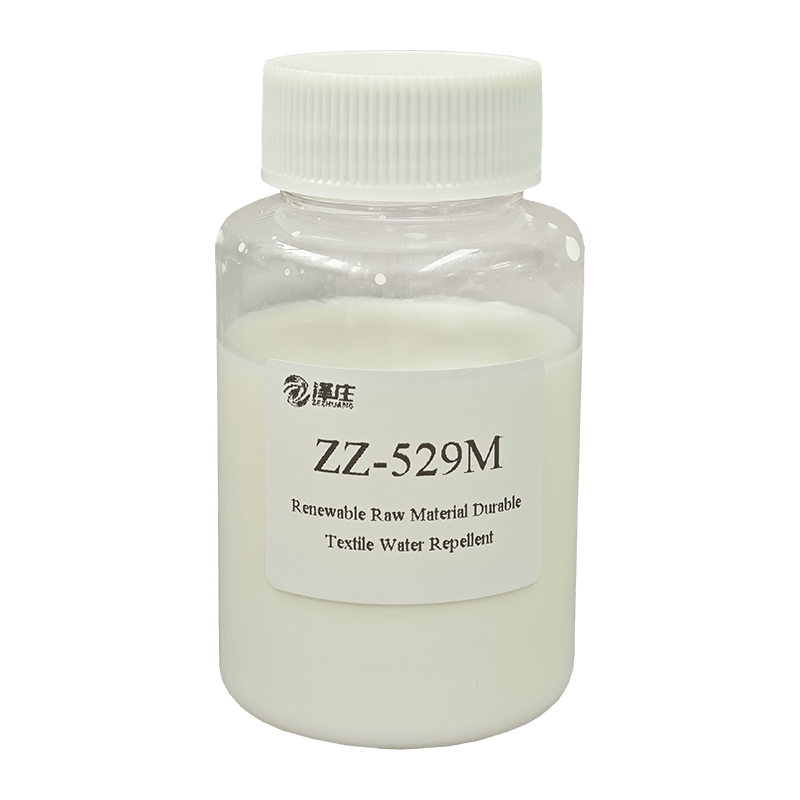 ZZ-529M Fluorine-Free Durable Water Repellent from Renewable MaterialsThis alkyl urea ester repellent provides wash-resistant waterproofing for fabrics and nonwovens. It suits apparel applications requiring durable water repellency with a lower environmental footprint.View Product →
UV absorbers follow the same fiber-specific logic. Polyester, nylon, and polyamide blends degrade differently, so a universal high-concentration grade simplifies stock keeping, while fiber-specific grades optimize wash fastness and lightfastness. A supplier that asks which fiber and performance standard you need is doing the job right.
Compliance documentation is part of the product. Before the first order, request the safety data sheet, the batch certificate of analysis, and a restricted substance declaration aligned with REACH or ZDHC. A supplier that cannot provide these within 48 hours is not ready for export-oriented production.
- Safety data sheet for the exact product grade
- Batch certificate of analysis for every delivery
- Restricted substance screening aligned with REACH or ZDHC
- Formaldehyde content declaration where relevant
- Certificate for renewable, recycled, or bio-based content claims
The most reliable textile chemicals and auxiliaries suppliers treat documentation as a deliverable. If the documents are incomplete at the quotation stage, they will be incomplete after a claim, when you need them most.
Frequently asked questions about textile chemicals and auxiliaries suppliers
What should a buyer request before the first order?
Request the technical data sheet, the safety data sheet, a batch certificate of analysis, and a restricted substance declaration. Then ask for a laboratory trial plan built around your fiber types and water quality.
Can I switch suppliers without re-qualifying my dyeing process?
No. An auxiliary change can alter levelness, fastness, and bath stability even when the active substance is identical. Run one laboratory trial and one production-scale pilot before committing a full recipe.
Why are fluorine-free water repellents more sensitive to process conditions?
Fluorine-free formulations build their effect during curing. Curing temperature, dwell time, fabric cleanliness, and residual pretreatment chemicals all influence contact angle and wash fastness.
How much does supplier location matter for auxiliary sourcing?
Location affects lead time and emergency response, but the key factor is whether the supplier holds finished goods in stock that match your specifications. A local warehouse with the wrong formulation is not an advantage.