

 English
  Español
 Content
- 1 Separating Textile Auxiliaries Manufacturers from Trading Resellers
- 2 Reading a Product Matrix by Fiber and Process Stage
- 3 Fluorine-Free Compliance: Auditing Chemistry Before You Approve
- 4 Supply Reliability: Production Bases, R&D, and Logistics
- 5 A Nine-Point Pre-Order Checklist for Textile Auxiliaries Manufacturers
- 6 Frequently Asked Questions on Auxiliary Supplier Selection
- 6.1 What is the difference between textile auxiliaries manufacturers and resellers?
- 6.2 How do I verify that a fluorine-free water repellent will pass PFAS restrictions?
- 6.3 Which auxiliaries are most critical for polyester and nylon dyeing?
- 6.4 How long does a new auxiliary supplier qualification take?
A dyehouse production manager in Guangdong recently showed me three quotes for a polyester leveling agent and a fluorine-free water repellent. The lowest-priced supplier turned out to be a reseller who could not provide a certificate of analysis, a stability report, or a lab formulation for the batch. That is why you vet textile auxiliaries manufacturers before the purchase order, not after the first off-spec delivery.
Use four filters to build a shortlist. The supplier must control formulation at its own facility, publish a product matrix matched to specific fibers and process stages, document environmental compliance, and hold enough production and stock capacity to support repeat orders. Hubei Zezhuang Technology Industrial Development Co., Ltd. is one integrated manufacturer with this profile, and its catalog is referenced throughout this article.
DefinitionA textile auxiliaries manufacturer is a company that synthesizes or formulates and quality-tests process chemicals, including leveling agents, fixing agents, degreasers, water repellents, and UV absorbers, at its own production base instead of repackaging traded chemistries without formulation responsibility.
Separating Textile Auxiliaries Manufacturers from Trading Resellers
Integrated textile auxiliaries manufacturers differ from distributors in three verifiable ways: they own the formulation, they control batch-to-batch stability, and they accept technical accountability for process results.
Integrated manufacturer
- Owns formulas and production records
- Publishes datasheets with dosages and limits
- Runs in-house laboratory and pilot testing
- Accepts liability for batch consistency
Trading distributor
- Sells labeled products from multiple sources
- Limited access to formulation data
- Batch quality depends on the original producer
- Technical support depends on the producer
Hubei Zezhuang shows what integrated operation looks like. The company started as Shanghai Zezhuang Industrial Co., Ltd. in 2011, keeps its marketing headquarters in Suzhou, runs a production base in Hangzhou, and in 2023 commissioned a 60-mu, roughly 4-hectare, plant in Jingzhou, Hubei, with a CNY 380 million investment. Its team includes two chemistry PhDs, eight master's-level researchers, and twenty-three bachelor's-level engineers, with research cooperation at Wuhan Textile University, Wuyi University, and Hunan Institute of Engineering.
2011Company established8Auxiliary categories60Mu Jingzhou plant380MCNY investment
If a supplier cannot walk you through its own production line, testing equipment, and technical staff, treat every product claim as unverified.
Reading a Product Matrix by Fiber and Process Stage
A strong manufacturer organizes auxiliaries by the process stage they serve, including dyeing, printing, washing-off, coating, bonding, calendering, foiling, footwear, and leather, and by the fiber chemistry they are designed for.
Textile chemistry is not interchangeable. Polyester disperse dyeing needs a high-temperature leveling agent stable at 130 degrees Celsius. Nylon acid dyeing needs a leveling and shade-repair system. Wool and silk require formaldehyde-free acid fixing. Spandex blends need a degreaser that will not damage elastane. A matrix that maps each product to a fiber and a process stage indicates real application testing.
| Dyeing | Leveling, dispersing, and repair agents | Dye uptake curves, high-temperature stability, shade reproducibility |
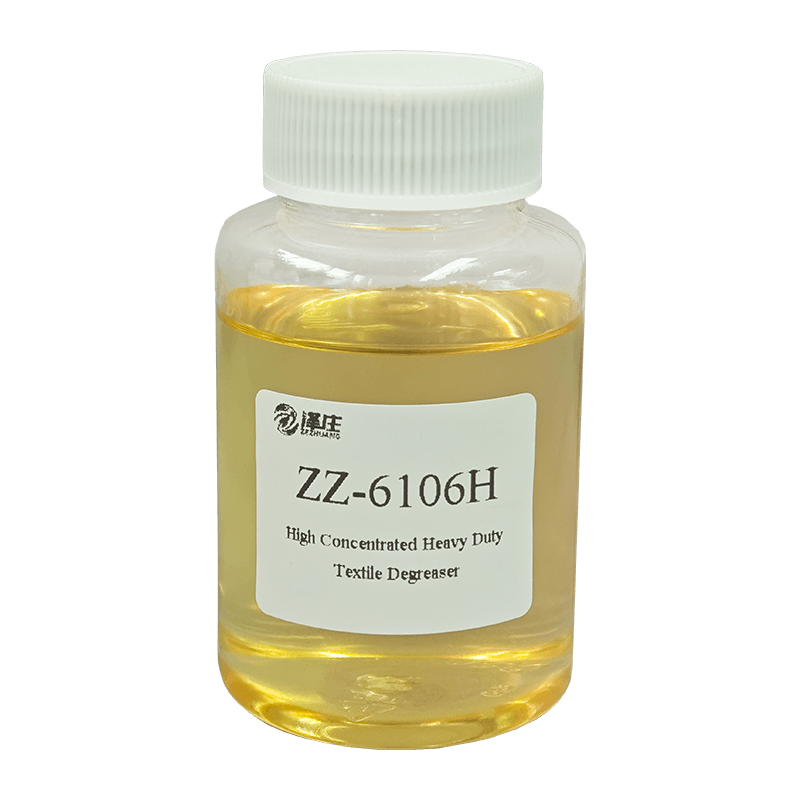
| Washing-off | Degreasers and scouring agents | Oil-removal efficiency, fiber compatibility, one-bath potential |
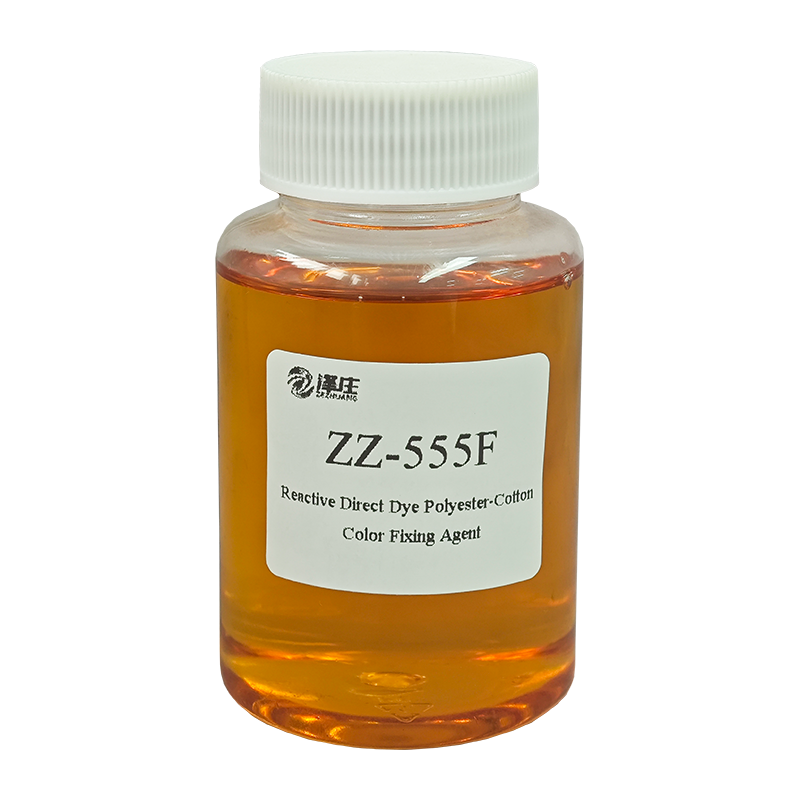
| Color fixation | Reactive, direct, and acid fixing agents | Free formaldehyde content, wet-fastness gain, shade change |
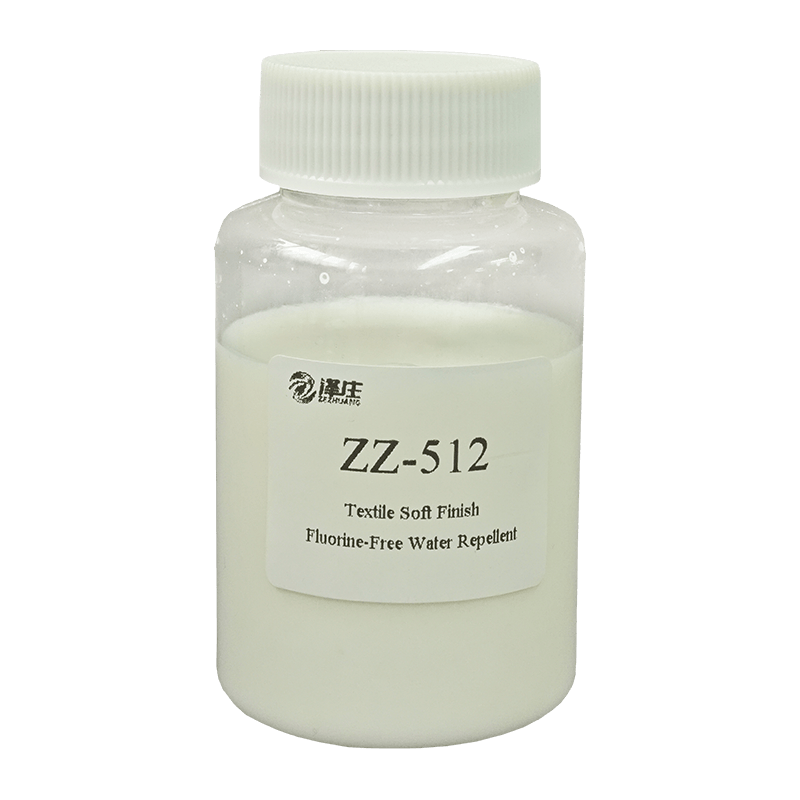
| Water repellency | Fluorine-free durable finishes | DWR durability, fabric handle, processing temperature window |
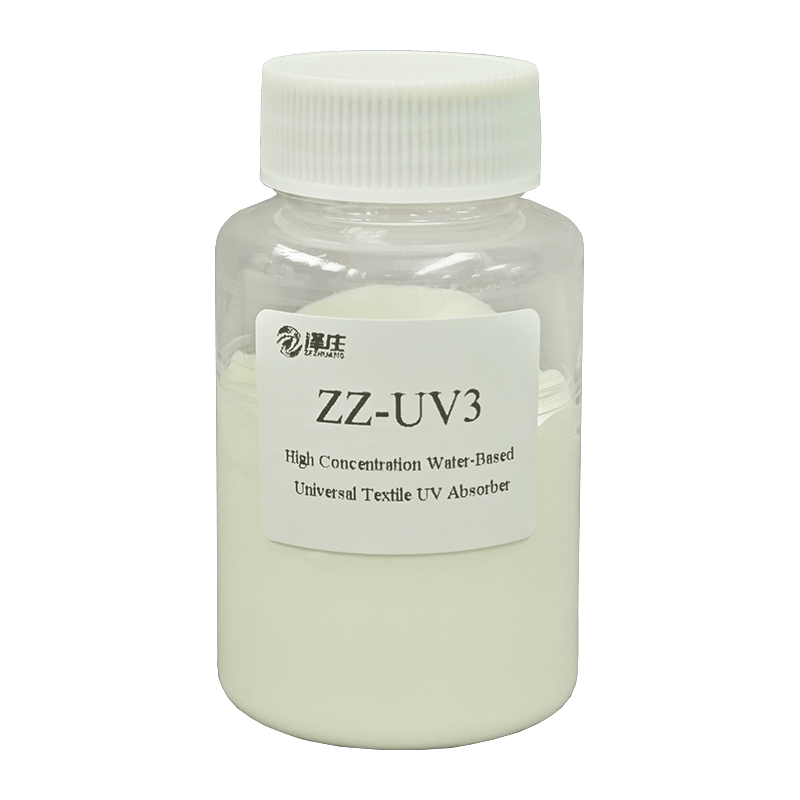
| UV protection | UV absorbers for polyester and nylon | UPF rating, wash resistance, dye compatibility |
In the dyeing stage, expect a leveling agent built for polyester high-temperature processing and a separate agent for nylon shade repair, because the dye mechanisms differ. Hubei Zezhuang publishes this division: polyester leveling, nylon acid shade control, polyester-cotton fixing, and spandex-blend degreasing as distinct families.
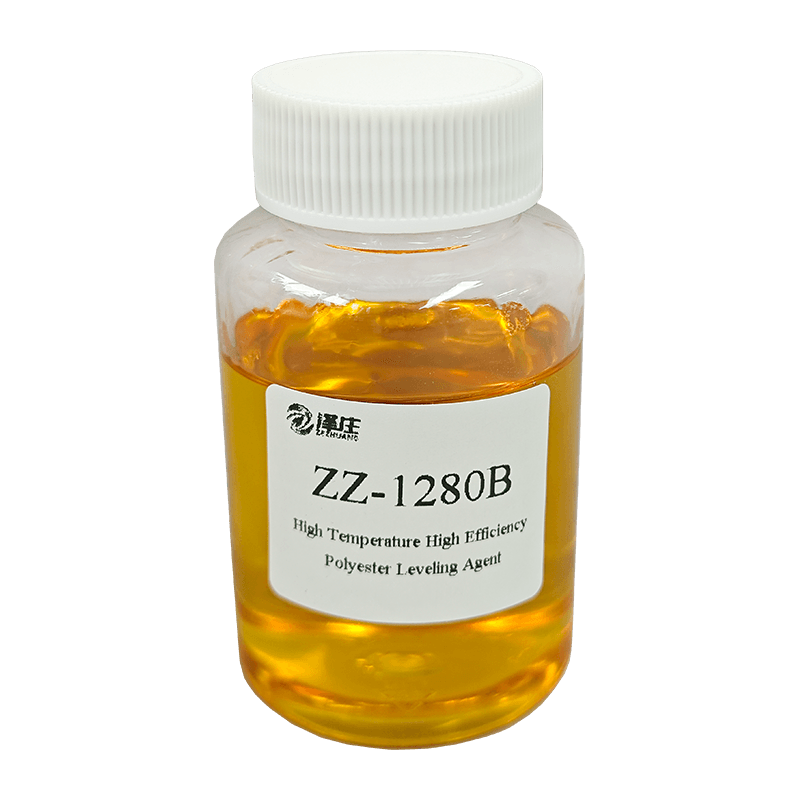 ZZ-1280B High Temperature High Efficiency Polyester Leveling AgentProduct IntroductionView Product →
The finishing range should cover soft-hand modification, low-temperature processing, high-temperature resistance, renewable raw materials, and fiber-specific blends. Many orders demand water repellency and a soft hand in the same finish, which is why silicone-modified fluorine-free chemistry exists as its own product line.
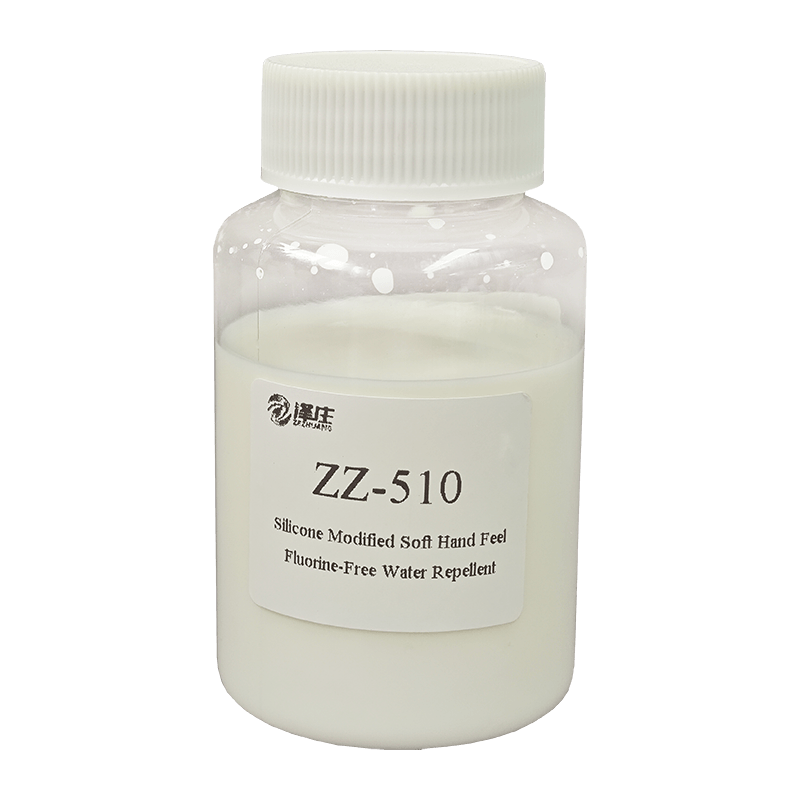 ZZ-510 Silicone Modified Soft Hand Feel Fluorine-Free Water RepellentProduct IntroductionView Product →
Auxiliary chemistry is not interchangeable: a polyester leveling agent, an acid dyeing repair agent, and a spandex degreaser solve different problems even when they sit on the same supplier's shelf.
Fluorine-Free Compliance: Auditing Chemistry Before You Approve
Fluorine-free water repellents are now the compliance baseline for textile auxiliaries manufacturers supplying export apparel, footwear, and outdoor-gear chains that face PFAS restrictions.
A compliance audit has three layers: no fluorinated raw material in the formula, a certificate of analysis covering unintentional PFAS impurities, and a processing window that fits your production conditions. Hubei Zezhuang's catalog carries six water-repellent models, including soft-hand, low-temperature, heat-stable, cotton-polyester, renewable-raw-material, and shoe-material antisiphoning variants, plus five UV absorbers for polyester, nylon, ultra-thin nylon, and polyamide-polyester blends. Compliance-driven textile auxiliaries manufacturers document these claims instead of leaving them on the marketing sheet.
Published product catalog depth, by category
Dyeing and printing auxiliaries9
Washing-off and repellent auxiliaries11
UV absorbers5
Foil processing chemicals3
Coating auxiliaries1
Bonding auxiliaries1
Footwear and leather auxiliaries2
Category counts based on the current published catalog of Hubei Zezhuang; UV absorbers are listed separately from general washing-off agents in the product tree.
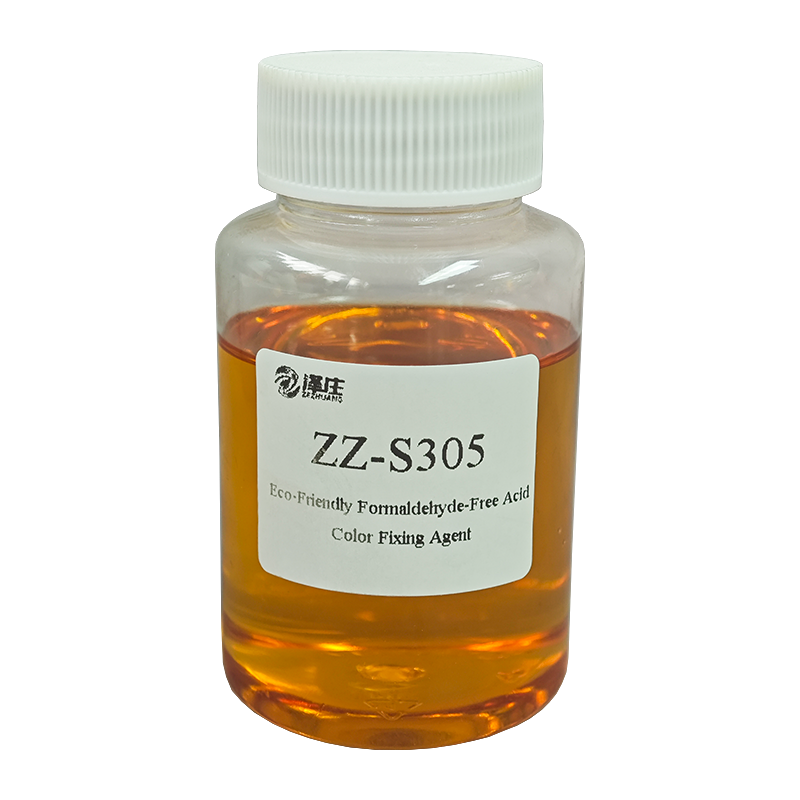 ZZ-S305 Eco-Friendly Formaldehyde-Free Acid Color Fixing AgentProduct IntroductionView Product →
11 models in the washing-off and repellent category, including fluorine-free, formaldehyde-free, low-temperature, and renewable-raw-material variants, give a compliance-driven buyer a real choice instead of a one-size-fits-all product.
For acid dyeing on wool, nylon, and silk, the same audit applies. A formaldehyde-free acid fixing agent must carry a test report on released formaldehyde, wet-fastness improvement, and shade change, not just the word eco in its name.
Supply Reliability: Production Bases, R&D, and Logistics
Supply reliability is the dimension that fails most in auxiliary sourcing: a dyeing line cannot pause for eight hours because a supplier's warehouse is empty.
Audit four logistics signals. Production footprint: multiple or expandable sites reduce exposure to a single plant shutdown. Geographic proximity: sales offices in Zhejiang, Hubei, Guangdong, Fujian, and Shandong put support and emergency stock near major textile clusters. Export handling: overseas business routed through Zhejiang Yongshuo Import and Export Co., Ltd. keeps Incoterms, documentation, and regulatory declarations under one team. Response commitment: a named technical contact who can reach the laboratory within one working day.
Practical rule
Require a written commitment on batch-to-batch consistency, a lead time matched to your production calendar, and a named technical contact with laboratory access. These three items separate reliable manufacturers from reactive traders.
A Nine-Point Pre-Order Checklist for Textile Auxiliaries Manufacturers
Use this checklist when you compare textile auxiliaries manufacturers; every point is verifiable by document or onsite audit.
- Confirm the supplier owns a production base and can show production records.
- Request a certificate of analysis for every batch, not only the sample.
- Check that the product matrix covers your fiber type and process stage.
- Review datasheets for dosage, temperature window, pH tolerance, and compatibility.
- Verify compliance documents including fluorine-free, formaldehyde-free, and PFAS declarations.
- Audit raw material sourcing, warehouse location, and stated lead times.
- Run a lab-to-bulk scaling trial using the same batch across lab, pilot, and production.
- Identify the technical contact and the protocol for shade-repair or defect support.
- Negotiate a written liability clause for off-spec batches that stop production.
One off-spec batch can idle a dyeing line for eight to twenty-four hours. That downtime usually costs more than the entire annual price gap between two suppliers.
Frequently Asked Questions on Auxiliary Supplier Selection
What is the difference between textile auxiliaries manufacturers and resellers?
An integrated manufacturer owns formulation, production, and quality control and accepts accountability for batch consistency. A reseller buys labeled products from multiple sources and passes them through without formulation responsibility. Ask for production records, a plant visit, and a certificate of analysis for the same batch number as your sample.
How do I verify that a fluorine-free water repellent will pass PFAS restrictions?
Ask for a third-party PFAS test on the finished product, review the raw material declaration, and confirm that the certificate of analysis covers unintentional PFAS impurities. Then match the processing window to your equipment: low-temperature lines need a product designed for that range; polyester finishing may use a heat-stable formulation.
Which auxiliaries are most critical for polyester and nylon dyeing?
Polyester dyeing depends on a high-temperature leveling agent, a pre-dye degreaser, and a disperse dye fixing or cleaning system. Nylon dyeing requires an acid leveling agent, a shade-repair product for rework, and an acid fixing agent that does not shift shade. Spandex blends add a separate degreaser requirement because elastane is sensitive to aggressive solvents.
How long does a new auxiliary supplier qualification take?
Usually two to four weeks for document review and laboratory testing, then one or two production-scale trials. Suppliers with an in-house laboratory can compress this window because they run compatibility tests before your mill trial instead of after it.
These answers reflect standard qualification scenarios for garment, home-textile, footwear, and technical textile producers.