

 English
 Español
Content
- 1 Why Polyester-Cotton Blends Need a Dedicated Fixing Step
- 2 How a Reactive Direct Dye Fixing Agent Works
- 3 Measurable Fastness Gains After Fixation
- 4 Selecting a Fixing Agent for Poly-Cotton Blends: What Matters Most
- 5 Application Sequence for Consistent Fixation
- 6 Frequently Asked Questions
- 7 Lock In Your Fastness, Protect Your Orders
The rejection report from the dyehouse lab arrived before the goods were dry: a 65/35 polyester-cotton shirting order failed the domestic wash fastness test, and the adjacent white polyester strip was stained at grade 2. The disperse dye on the polyester face held perfectly. The direct dye on the cotton component did not.
Direct dyes are economical, level easily, and cover the full shade range, but their water-soluble sulfonate groups survive washing unless a reactive direct dye fixing agent for polyester-cotton blends is applied after dyeing. That after-treatment converts a blend that bleeds into fabric that passes repeated commercial laundering.
Mills running woven poly-cotton shirting, workwear, and bedding face the same decision point every day: how to keep the cost advantage of direct dyes while delivering the wet fastness that buyers now specify as a contractual requirement. The answer is not a better dyeing recipe. It is a separate, well-controlled fixation step.
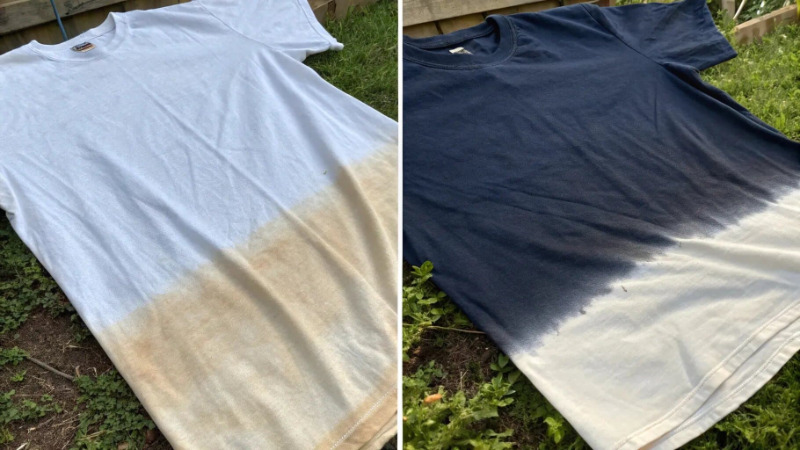
Poor wash fastness on direct-dyed cotton can stain adjacent white fabrics during laundering.
Why Polyester-Cotton Blends Need a Dedicated Fixing Step
Polyester-cotton blends need a dedicated fixing step because the two fibers hold color by completely different mechanisms, and only the cellulosic portion remains vulnerable to dye desorption.
Polyester is dyed with disperse dyes at 125 to 135°C. The dye dissolves into the polymer and stays trapped as solid particles when the fabric cools. Neutral wash liquor at 40 to 60°C cannot extract it, so the polyester side almost never causes a wash fastness rejection. Cotton takes reactive dyes or direct dyes. Reactive dyes form covalent bonds with cellulose hydroxyl groups and already reach a wash fastness of 4 to 5.
Direct dyes, by contrast, are large planar anions held by hydrogen bonds and van der Waals forces. Those secondary bonds break when detergent anions, alkali, and mechanical action work together in a washing machine, and the dye desorbs back into the liquor. Deep shades are the most vulnerable. A navy or black shade built with 3 to 4 percent owf of direct dye leaves a higher absolute quantity of labile dye inside the fiber, which is why the heaviest shades show the fastest bleeding and the strongest staining onto adjacent fabric.
How a Reactive Direct Dye Fixing Agent Works
A reactive direct dye fixing agent works by reacting with anionic dye molecules on the cotton fibers and building a high-molecular-weight network that locks the dye inside the fiber.
Most commercial products in this class are low-molecular-weight polyamines or polycationic resins. Because the molecule is small, it penetrates into the cellulosic fiber easily. The cationic sites then attract the anionic sulfonate groups of the direct dye and form ionic crosslinks between adjacent dye molecules. As the resin reacts and the molecular weight increases, the dye-resin complex becomes too large to diffuse out of the fiber, and its water solubility drops sharply.
Formaldehyde-free grades take this a step further: heat-activated reactive groups in the resin bond covalently to cellulose hydroxyls, so the network is anchored not only to the dye but to the fiber itself. On a blend, the same treatment has to leave the disperse dye untouched. A correctly formulated product is neutral toward the disperse fraction, so the polyester color remains unchanged and the cross-staining rating on the polyester side does not shift.
Reactive Direct Dye Fixing Agent
A cationic polymer or resin that complexes with water-soluble anionic direct dyes on cellulosic fibers to form an insoluble high-molecular-weight network, improving wash, rub, and perspiration fastness without stripping the dye from the fiber.
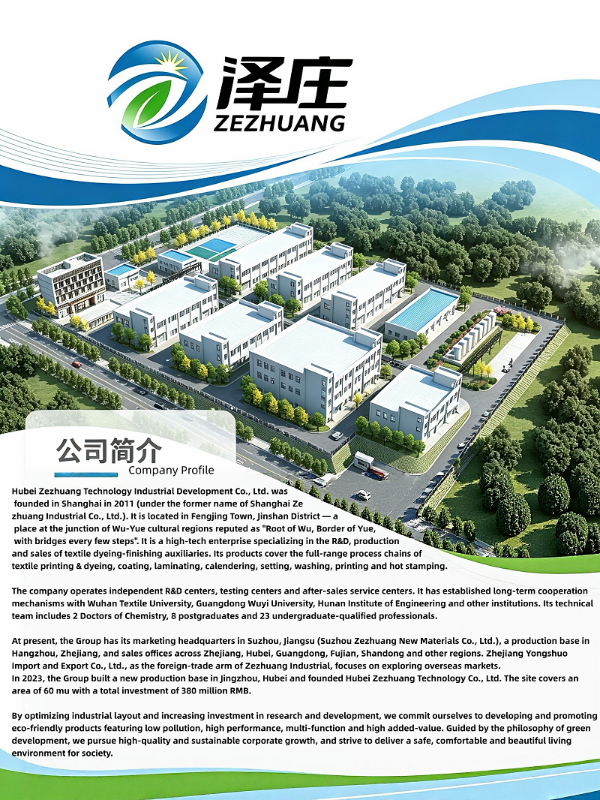
For export-driven dyehouses facing strict fastness requirements, Hubei Zezhuang Technology Industrial Development Co., Ltd. formulates the ZZ-555F color fixing agent specifically for polyester-cotton fabrics dyed with reactive or direct dye systems. As a recognized supplier of textile dyeing and finishing auxiliaries, Zezhuang ensures that a dyehouse does not need to switch chemistry when a program changes fiber ratio or dye class.
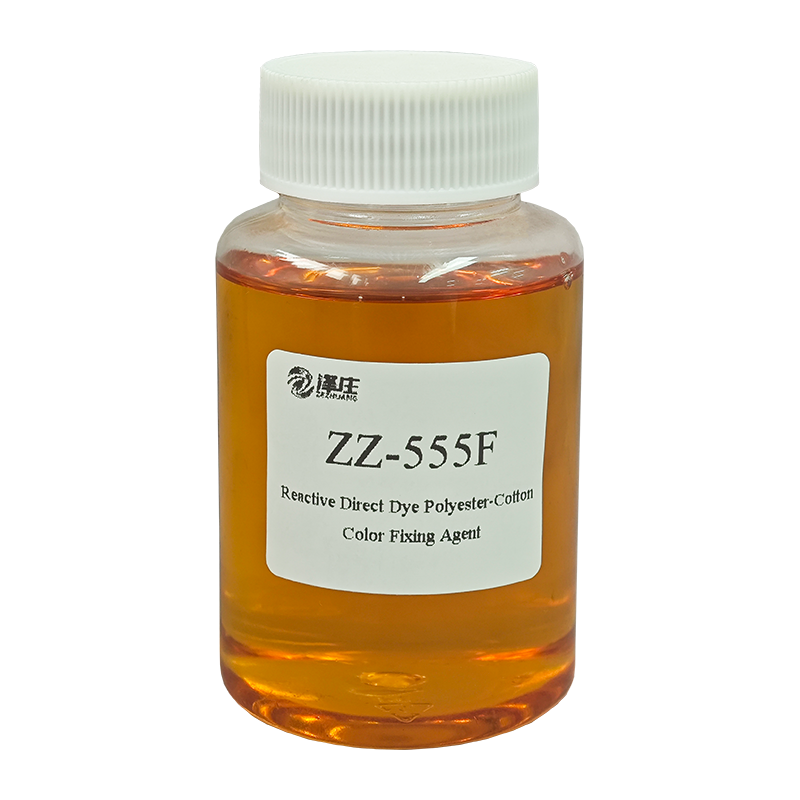 ZZ-555F Color Fixing Agent for Reactive and Direct Dyes on Polyester-CottonThis after-treatment agent improves wash, rub, and perspiration fastness on reactive and direct dyed fabrics while minimizing shade change. Its alkali resistance suits mercerizing, and it is formaldehyde-free.View Product →
Measurable Fastness Gains After Fixation
Grey-scale wash fastness improves by 1.5 to 2 grades, wet rub fastness by one full grade, and perspiration fastness reaches 4.5 when the fixing agent is applied at the recommended dosage.
In a controlled production trial on 65/35 poly-cotton twill dyed with C.I. Direct Blue 86 at 1.2 percent owg and C.I. Direct Red 227 at 0.8 percent owg, fixed with 2.0 percent owg of a cationic fixing agent at 70°C for 30 minutes, then washed five times, the results were clear:
4-5Shade change rating (ISO 105-C06)
4-5Adjacent cotton staining (ISO 105-C06)
4Adjacent polyester staining (ISO 105-C06)
4.5Alkaline perspiration (ISO 105-E04)
Wet rubbing improves for a slightly different reason. The resin film holds dye particles at the fiber surface mechanically, so when a wet crockmeter square rubs across the fabric, fewer dye particles are pulled loose and smeared onto the test cloth. Mills running dark shades with softener adds can protect that gain by keeping fixation ahead of all anionic after-treatments.
Selecting a Fixing Agent for Poly-Cotton Blends: What Matters Most
Choose a fixing agent that is formaldehyde-free, works across a pH range of 5 to 7, tolerates application temperatures between 60 and 80°C, and does not shift shade by more than 0.5 Delta E on the target blend.
Export-driven dyehouses should treat formaldehyde content as the first gate. Older melamine-formaldehyde resins boost fastness but release free formaldehyde above the limit that Oeko-Tex Standard 100 allows for garments worn against the skin. Modern polyamine and dicyandiamide types are non-detect and perform to the same or better fastness levels, so they are the only defensible choice for European and North American orders.
- Formaldehyde Content: Not detected (Oeko-Tex compliant for export garments).
- Working pH: 5.0 to 6.5 (Matches the acetic acid adjustment after dyeing).
- Application Temperature: 60 to 80°C (Fast exhaustion on jig, jet, and winch machines).
- Shade Change: Below 0.5 Delta E (Bulk shades stay inside the approved standard).
- One-bath Softener Stability: Stable with non-ionic softeners (Shortens process time and saves water).
- Effect on Disperse Dye: No polyester staining (Preserves the blend cross-stain rating).
Application Sequence for Consistent Fixation
Apply the fixing agent in a fresh bath immediately after dyeing and rinsing, before any anionic softener, at 2.0 to 4.0 percent owg depending on shade depth.
Common application mistakes that reduce fastness results:
1. Mixing with anionic auxiliaries: Adding the fixer into the same bath as anionic dyeing auxiliaries precipitates the fixer before it reaches the fiber.
2. Temperature too low: Fixing below 50°C leaves the resin un-reacted and produces only a surface film that washes off in the first laundering.
3. Overdosing without pH control: Causes polymer deposits that feel hard and lighten the shade.
To ensure batch-to-batch consistency and accurate shade control, Zezhuang's in-house R&D and testing center performs rigorous fastness and formaldehyde content checks before every shipment. Supported by production bases in Hangzhou and Jingzhou, as well as long-term research cooperation with Wuhan Textile University and Hunan Institute of Engineering, Zezhuang guarantees the chemical reliability required for your export orders.
Frequently Asked Questions
Can the fixing agent affect the disperse dye on the polyester component?
No, if you select the correct product class. Formaldehyde-free polyamine and polycationic fixing agents are designed to react preferentially with anionic direct dyes on the cellulosic part of the blend. At the recommended pH and temperature, they do not strip or migrate disperse dye, and the adjacent polyester staining rating in ISO 105-C06 stays at 4 or better.
Can one product fix both reactive-dyed and direct-dyed polyester-cotton?
Yes. The label "reactive direct dye fixing agent" indicates that the chemistry is effective for both dye classes. For direct dyes, it builds the dye-resin network that stops desorption. For reactive dyes, it adds a supplementary cationic crosslink that pushes wash and rub fastness from an already good 4 up to 4.5 or 5.
How much shade change should a mill expect after fixation?
A well-formulated fixer changes shade by less than 0.5 Delta E on most poly-cotton shades. Dark shades may appear slightly deeper because more dye remains in the fiber instead of bleeding out. Recalculate the dye dosing after the first production trial if shade depth moves outside your approved limit.
What dosage is recommended for a 65/35 polyester-cotton blend?
Use 2.0 percent owg for medium shades and 3.0 to 4.0 percent for deep shades such as navy, black, and wine. High-liquor-ratio jigs generally need the upper end of the range, while low-liquor-ratio jets can run at the lower end. Always confirm with a lab trial on the exact blend ratio and machine type.
Lock In Your Fastness, Protect Your Orders
Direct dyes don't have to be a liability for your export orders. By integrating a dedicated, formaldehyde-free fixation step, dyehouses can confidently deliver the wash, rub, and perspiration fastness that global buyers demand.
If your mill is experiencing cross-staining rejections or needs a reliable fixing agent for poly-cotton blends, our technical team is ready to help. Contact us here to request a sample of ZZ-555F or discuss your specific application parameters.