

 English
 Español
Content
- 1 Standard What Durable Water Repellency Without Fluorine Actually Demands
- 2 Market Drivers Why the Shift Away from Fluorinated DWR Is Accelerating
- 3 Chemistry Formulation Routes That Make DWR Without Fluorine Work
- 4 Processing Processing Conditions That Decide Wash Durability
- 5 Specification Specifying and Testing a Fluorine-Free DWR
- 6 FAQ Frequently Asked Questions About Fluorine-Free DWR
A finishing mill in Zhejiang receives a brief straight from an outdoor brand: 20-denier nylon taffeta, initial spray rating 90 or higher, no fluorochemicals anywhere in the recipe, and at least 80 percent of that rating retained after 20 home launderings. Three years ago that brief would have been rejected as technically contradictory. Today, the question of how durable water repellency without fluorine is achievable for outdoor textiles has a production-ready answer, and it is rewriting finishing specifications across the industry.
The short answer is that non-fluorinated DWR systems based on reactive polymers, dendrimer networks, and silicone hybrids now crosslink on the fiber surface in a way the old paraffin waxes never could. Suppliers that specialize in textile dyeing and finishing auxiliaries, such as Hubei Zezhuang Technology Industrial Development Co., Ltd., now offer fluorine-free water repellents engineered specifically for wash-durable, outdoor-grade performance.
Standard What Durable Water Repellency Without Fluorine Actually Demands
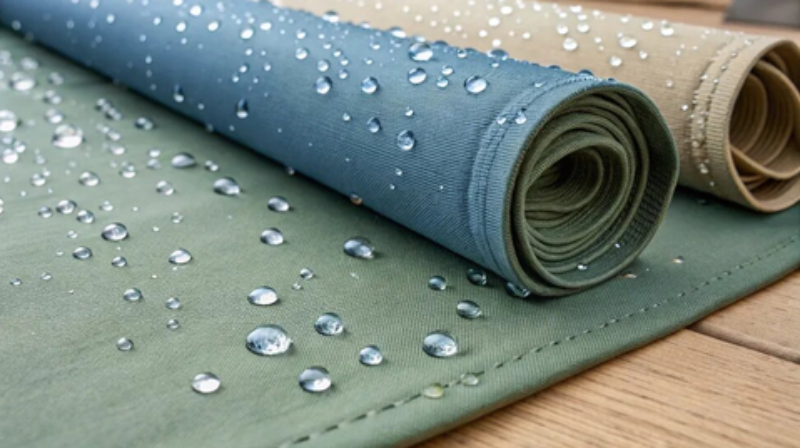
Durable water repellency without fluorine is a measurable engineering target, not a marketing claim. Water repellency on textiles is measured with ISO 4920 or AATCC 22, where a rating of 90 means droplets roll off under a standard spray, and 80 means slight wetting in isolated spots.
A finish only earns the word "durable" when it holds at least 80 percent of its initial rating through accelerated wash cycles that simulate outdoor use. For most global brands, this means passing 20 cycles of ISO 6330 domestic laundering without a significant drop in performance.
90+Initial spray rating target
80+Spray rating after 20 ISO 6330 washes
Market Drivers Why the Shift Away from Fluorinated DWR Is Accelerating
Regulation and brand policy, not a sudden dislike of fluoropolymers, are forcing the transition to non-fluorinated finishing. The EU REACH universal PFAS restriction proposal covers more than 10,000 fluorinated substances, and several U.S. states have set apparel PFAS bans beginning between 2025 and 2032.
Long-chain C8 chemistry was the default for three decades, but it degrades into persistent PFOA and PFOS compounds that are now internationally restricted. Short-chain C6 systems reduced persistence, yet remain inside the scope of the new proposals. Most global outdoor brands have thus imposed their own fluorine-free deadlines.
Fluorinated polymers lower surface energy to 11-15 mN/m, which is enough to repel both water and oils. Non-fluorinated alternatives typically reach 24-28 mN/m: clearly hydrophobic, but not oleophobic. That gap explains why oil repellency, not water repellency, is the real specification challenge for fluorine-free DWR.
Chemistry Formulation Routes That Make DWR Without Fluorine Work
Modern fluorine-free DWR finishes are reactive film-formers selected by fiber type, wash protocol, and target hand feel, not recycled wax emulsions. Paraffin waxes were the original water repellents, but they wash out because they only sit on the surface. The current generation of fluorine-free products builds a thin polymer network around each fiber, keeping the fabric breathable while surviving much harsher laundering cycles.
Instead of comparing raw chemical data in a dense table, the practical selection comes down to three distinct routes:
- Silicone-modified polymers: Very soft, slick hand feel. Best suited for nylon shells and comfort garments where drape and silence are critical.
- Hyperbranched dendrimers: Soft, dry hand feel with excellent durability. Ideal for premium outdoor jackets.
- Reactive polyurethanes: Supple and stretch-compatible. The go-to choice for stretch and knit shell fabrics.
Product selection follows the same logic. For an outdoor order that demands a non-fluorinated declaration plus repeated laundering, a renewable raw material based repellent such as Zezhuang's ZZ529M is designed for exactly that requirement profile.
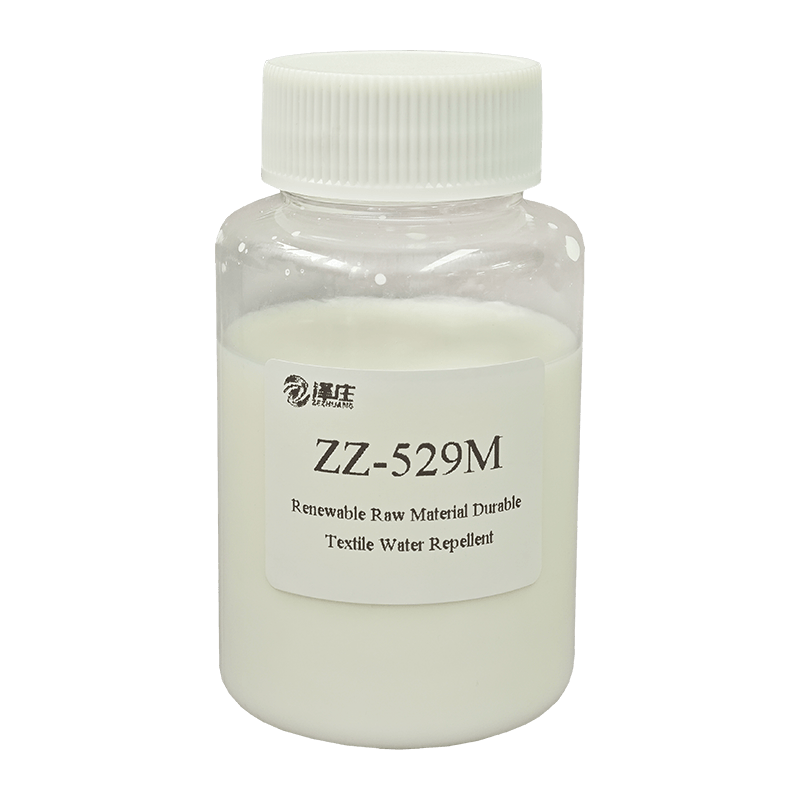 ZZ-529M Renewable Raw Material Durable Water RepellentA fluorine-free durable water repellent made from renewable raw materials, offering wash-resistant performance ideal for outdoor textiles requiring non-fluorinated declarations and repeated laundering.View Product →
Dendrimers and reactive polyurethanes form a crosslinked shell around individual fibers rather than a continuous film. That shell geometry preserves breathability while keeping wash durability, unlike the stiff wax treatments of earlier decades.
Processing Processing Conditions That Decide Wash Durability
Curing temperature, pad-liquor pH, and add-on level determine success just as much as the chemistry in the drum. A non-fluorinated DWR only develops its full wash durability when the polymer crosslinks properly on the fiber. Under-curing leaves a film that dissolves in the first wash, no matter how well the chemistry performed in laboratory screening.
For production teams moving from C6 to non-fluorinated chemistry, four process-control rules decide the outcome:
- Cure at 150 to 170 degrees Celsius for 60-90 seconds to develop the crosslinked network; verify actual fabric temperature, not just oven settings.
- Keep pad-liquor pH at 4-5; alkaline carry-over from dyeing blocks the reactive groups.
- Control wet pick-up to roughly 60-70%; excess liquor creates uneven film and slower drying.
- Check compatibility before adding resin, softener, or UV absorber to the same pad bath; some emulsifiers re-emulsify the film during laundering.
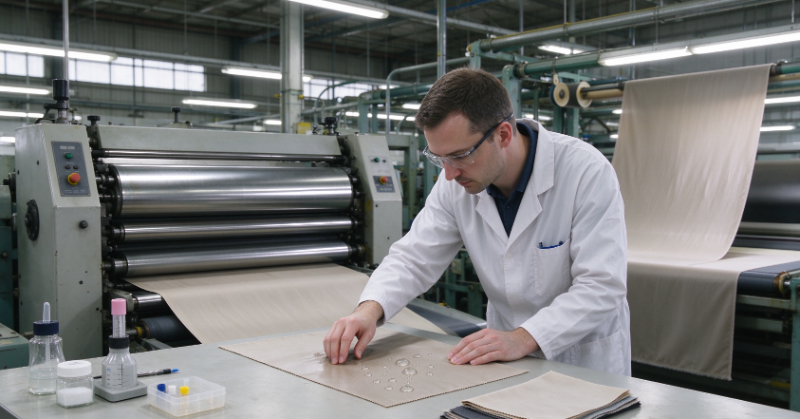
Calendering is a frequent failure point that has nothing to do with the chemistry: high nip pressure can crush filament bundles and press the finish film flat, lowering the measured spray rating.
When the route includes high-temperature steps, the formulation must tolerate them. Zezhuang's ZZ527 non-fluorine water repellent is positioned for such lines, holding up where weaker thermal stability would fail.
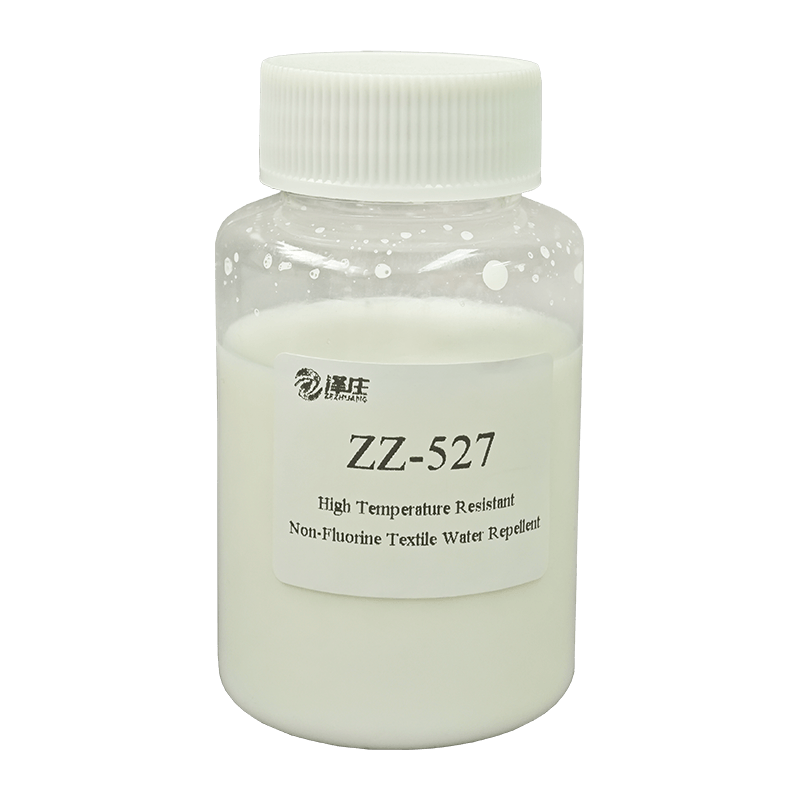 ZZ-527 High-Temperature Resistant Non-Fluorine Water RepellentA fluorine-free water repellent with good thermal stability, suitable for high-temperature processing lines and polyester fabrics, providing durable water repellency and a soft hand feel.View Product →
Zezhuang's in-house testing center routinely runs ISO 6330 wash cycles alongside production batches, allowing technical teams to verify the curing window before the fabric moves to the cutting floor.
Specification Specifying and Testing a Fluorine-Free DWR
A compliant specification states the test method, the initial value, the wash protocol, and the acceptance threshold for every property that matters. Too many mills order a "fluorine-free DWR" without a number attached, then rely on a handwash test and hope. Define the full set of criteria before production starts.
Spray rating: ISO 4920 or AATCC 22, initial 90+ and post-wash 80+ after 20 ISO 6330 wash cycles.
Oil repellency: AATCC 118, expected rating 0-1 for non-fluorinated systems; if the item must resist oily stains at rating 4 or higher, a fluorine-free DWR alone will not pass.
Hydrostatic head: ISO 811, relevant for seam-taped extreme-weather garments rather than everyday shells.
Hand-feel delta: measure bending stiffness and run a subjective panel comparing treated and untreated fabric before mass production.
Hand feel is where many fluorine-free programs succeed or stall. A 20-denier nylon shell needs a supple, silent drape, and that is usually a job for a silicone-modified fluorine-free repellent rather than a wax or stearamide type.
Once the wash protocol, initial value, and hand-feel delta are written into the quality sheet, a non-fluorinated finish becomes an auditable specification. That is how durable water repellency without fluorine is now achievable for outdoor textiles: engineering, not chemistry compromise.
FAQ Frequently Asked Questions About Fluorine-Free DWR
Can fluorine-free DWR truly survive 20 home launderings?
Yes. Reactive polyurethane, dendrimer, and correctly formulated silicone-based systems now hold 80 percent or more of their initial spray rating after 20 ISO 6330 wash cycles. Validate the claim on the actual production fabric, because curing conditions and fiber type change the result.
Is "fluorine-free" the same as "PFAS-free"?
Not automatically. Fluorine-free means the product contains no fluorinated polymers, the stricter and safer claim for outdoor textiles. PFAS-free also excludes short-chain fluorotelomer residues and related side products. Ask the supplier for a fluorine and PFAS test report before approval, not just a product name.
Does a non-fluorinated DWR reduce fabric breathability?
No. Because the modern finish bonds as a thin polymer shell on individual fibers instead of a continuous film across the fabric, moisture-vapor transmission stays essentially unchanged. This is a clear advantage over old wax and stearamide coatings that plugged the interstitial spaces.
Which fibers work best with fluorine-free water repellents?
Nylon and polyester give the most consistent results because their synthetic surfaces offer stable anchors for the crosslinked film. Cotton and cotton-polyester blends need a dedicated formulation with different reactive chemistry, since cellulose wets quickly and accelerates film failure. Wool and silk are workable but require a milder curing window.
Transitioning to a fluorine-free DWR is no longer a chemistry compromise; it is a process engineering task. When the reactive polymer, the curing window, and the wash specification are aligned, outdoor textiles can meet both brand deadlines and end-user performance expectations.
Hubei Zezhuang Technology Industrial Development Co., Ltd. supports this transition with production bases in Hangzhou and Jingzhou, an independent R&D and testing center, and ongoing cooperation with universities such as Wuhan Textile University and Guangdong Wuyi University. If your team is evaluating a fluorine-free DWR for an upcoming outdoor order, our technical team can review your fabric specs and recommend starting formulations.