

 English
 Español
Content
- 1 What Is a Renewable-Source Water Repellent?
- 2 Performance Benchmarks for Bio-Based Durable Water Repellent Finishes
- 3 Renewable-Source Water Repellent vs. Fluorocarbon: Direct Comparison
- 4 Application Guidelines for Renewable-Source Functional Finishing
- 5 How to Verify Renewable-Source Claims Before You Commit
- 6 Frequently Asked Questions About Renewable-Source Water Repellents
- 7 The Path Forward for PFAS-Free Finishing
The European Union's universal PFAS restriction proposal, submitted in January 2023, covers more than 10,000 per- and polyfluoroalkyl substances and is expected to begin phasing out textile uses from 2027. For finishing plants that run C6 or C8 fluorocarbon water repellents, the practical question is no longer whether to switch, but which renewable-source water repellent will hold up on spray rating, wash durability, and hand feel.
Renewable-source water repellents are emerging as one of the most credible answers, because they combine regulatory compliance with documented renewable content in a standard pad-dry-cure process. Bio-based functional finishing for sustainable textiles is not a different machine or a complicated recipe; it is a disciplined selection of chemistry, cure conditions, and verification documents. This article explains the chemistry behind these finishes, the performance numbers you can defend, the application adjustments that affect results, and the documents to request before approving a new supplier.
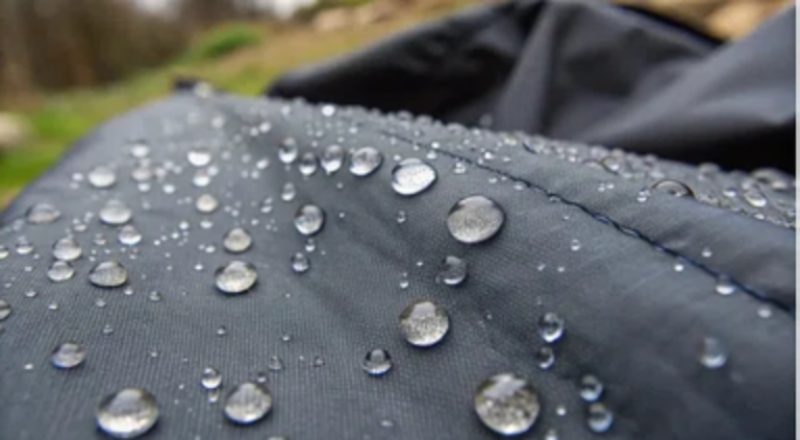
Excellent water beading effect demonstrating durable water repellency (DWR) on outdoor fabric.
What Is a Renewable-Source Water Repellent?
Renewable-source water repellent: a durable water repellent finish whose principal film-forming polymer or wax is synthesized from biological feedstocks, such as plant oils, fatty acids, bio-based polyols, or natural waxes, instead of petroleum-derived or fluorinated monomers.
Most non-fluorinated DWRs on the market belong to one of four families: paraffin-wax emulsions, modified polyolefin dispersions, dendrimer systems, or polyurethane dispersions. A renewable-source version substitutes bio-based building blocks for part or all of the polymer backbone. In a bio-based polyurethane DWR, for example, the polyol fraction can come from castor oil or rapeseed oil; in a wax system, the paraffin can be replaced with plant-derived wax esters.
Hubei Zezhuang Technology Industrial Development Co., Ltd., a textile dyeing and finishing auxiliaries manufacturer with production bases in Hangzhou and Jingzhou, addresses this segment with the ZZ529M renewable-raw-material durable textile water repellent, a non-fluorinated formulation designed for renewable feedstock content and repeated-laundry durability.
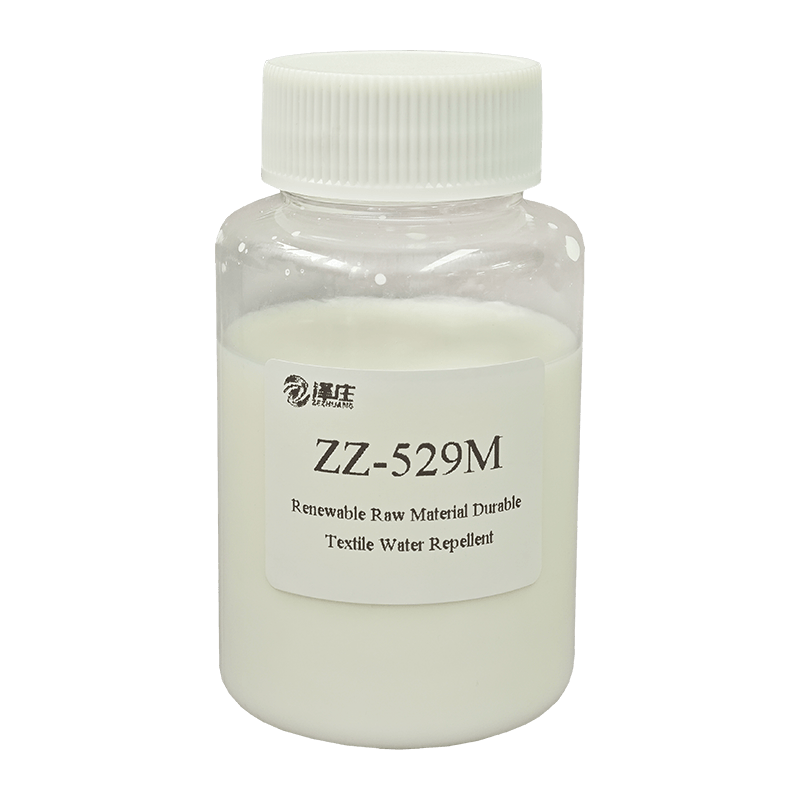 ZZ-529M Renewable Feedstock Durable Water RepellentThis fluorine-free, alkyl urea ester formulation is designed for wash-resistant waterproofing with renewable raw material content. Its weak cationic emulsion suits textile mills seeking durable performance while addressing sustainability claims.View Product →
A common misunderstanding is equating renewable with biodegradable. Renewable refers to the origin of the feedstock, typically verified by radiocarbon analysis under ASTM D6866, which measures the percentage of bio-based carbon in the product. Biodegradation is a separate property governed by the final polymer structure. A renewable-source water repellent can still be engineered for durability, which is precisely what finishing plants need.
Commercial bio-based water repellents typically contain 45 to 80 percent bio-based carbon by ASTM D6866 while maintaining a fluorine-free, non-petroleum polymer backbone.
Performance Benchmarks for Bio-Based Durable Water Repellent Finishes
A well-formulated renewable-source water repellent reaches an initial AATCC 22 spray rating of 90 to 100 and retains 70 to 80 after 20 home launderings, which places it within the same specification range as C6 fluorocarbon chemistry for most apparel and outdoor textiles.
The AATCC 22 spray test grades a fabric from 0 to 100 by measuring how water beads and rolls off a tilted specimen. Scores of 90 and above mean no wetting of the test face; scores below 70 indicate the finish has largely depleted. This is the number most buyers write into their quality agreements, so it belongs at the center of any evaluation. It also matters, before testing, to distinguish water-repellent, water-resistant, and waterproof performance, because each requires a different finishing strategy.
90-100
Initial AATCC 22 spray rating
70-80
Rating after 20 washes
45-80%
Bio-based carbon by ASTM D6866
150-170 C
Curing temperature range
Hand feel is the second benchmark. Fluorinated finishes are known for a soft, neutral touch, and early non-fluorine water repellents often felt stiff or waxy. Modern bio-based formulations close most of that gap. Silicone-modified variants such as the ZZ510 soft-hand-feel fluorine-free water repellent are designed to deliver water repellency with a smooth, drapable hand on modal, cotton, and cotton-polyester blends.
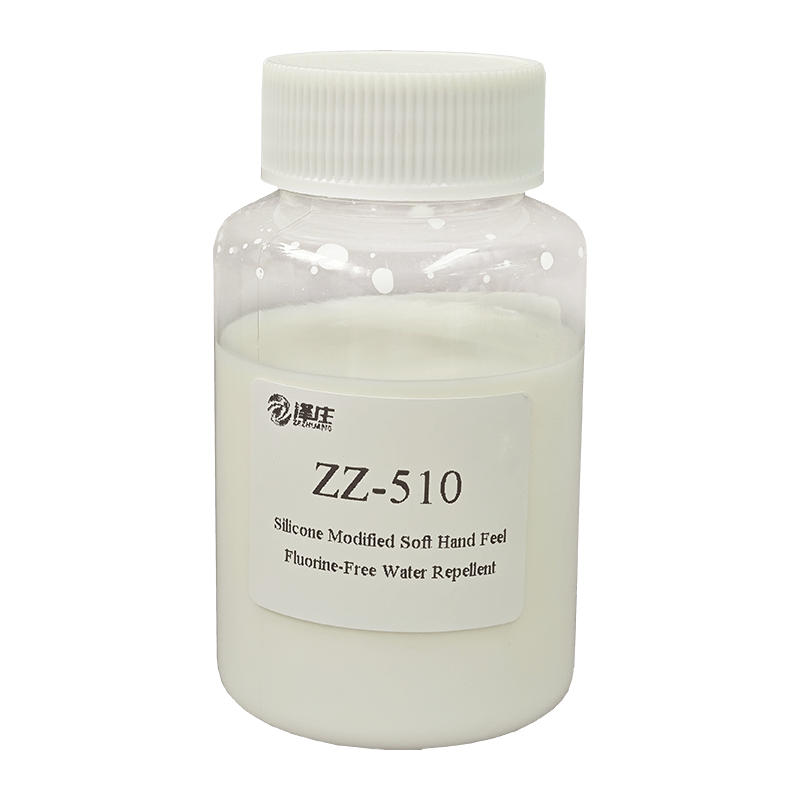 ZZ-510 Silicone-Modified Soft-Hand Fluorine-Free RepellentA silicone resin-based water repellent that imparts a smooth, drapable hand on modal, cotton, and blends. It offers durable water repellency without fluorochemicals, meeting finish-quality expectations for modern textile processing.View Product →
Renewable-Source Water Repellent vs. Fluorocarbon: Direct Comparison
The only major performance gap between renewable-source water repellents and fluorocarbon DWRs is oil repellency; for water-only specifications, the two chemistries are close enough that most mills can switch without changing the buyer's performance target.
Where renewable-source leads
- Zero PFAS regulatory exposure
- Documented bio-based carbon content (45-80%)
- Initial spray rating 90-100, retains 70-80 after 20 washes
- No persistent degradation products
- Soft-hand options via silicone modification
Where fluorocarbon still leads
- Oil and stain repellency (AATCC 118 rating 4-6)
- Marginally higher ratings after 30+ washes (80-90)
- Long track record in technical uniform specifications
Choose a renewable-source water repellent when the requirement is water repellency, not oil repellency. Most apparel, outdoor, footwear, and home textile specifications fall into this category.
Application Guidelines for Renewable-Source Functional Finishing
Bio-based water repellents run on standard pad-dry-cure equipment; performance success depends on five process variables that operators can control today.
Pre-clean the fabric. Residual knitting oils, sizing agents, and dyeing auxiliaries block film formation. Use a high-concentration degreaser before the repellent bath.
Adjust the pad bath pH to 4-6. Bio-based dispersions are typically formulated for slightly acidic conditions; a higher pH reduces crosslinking efficiency.
Pad to 60-75 percent wet pick-up. Higher add-on increases cost without improving the rating; lower add-on leaves bare spots on textured surfaces.
Dry at 110-130 C. Over-drying before curing can drive the film former to the fiber surface unevenly.
Cure at 150-170 C for 60-120 seconds. This is where the film crosslinks and develops wash durability; a 10 C miss on cure temperature is the most common cause of low spray ratings.
For heat-sensitive fibers such as nylon-elastane blends, standard curing temperatures can cause yellowing or loss of elasticity. Zezhuang's technical team provides specialized low-temperature formulations in the 120-140 C range to meet both initial and after-wash spray requirements without damaging delicate fabrics. A full selection method is covered in our guide to choosing water repellent agents in a dye factory.
Operator rule: validate every new bio-based DWR batch with a small pad trial on the exact grey fabric before production; spray rating changes of more than 5 points between batches signal a formulation or bath-condition problem.
How to Verify Renewable-Source Claims Before You Commit
The only defensible proof of renewable content is an ASTM D6866 radiocarbon test report from an accredited laboratory; a marketing claim on a datasheet is not evidence of bio-based functionality.
Request the following items from any supplier of renewable-source water repellents and review them before scale-up trials:
- ASTM D6866 analysis showing bio-based carbon percentage for the specific product batch
- Safety data sheet and restricted substance statement confirming zero fluorine chemistry and compliance with ZDHC MRSL levels
- Batch consistency data: solids content, viscosity, pH, and storage stability at 25 C for six months
- Wash-durability curves on the fiber blends you actually process, not only on the supplier's reference polyester
A reliable chemical supplier should be able to provide the full dossier within two weeks. Manufacturers with in-house R&D and dedicated testing staff are the ones that produce complete, reproducible documentation. Zezhuang's group includes an R&D center, a testing center, and an after-sales service center, with research cooperation agreements with Wuhan Textile University, Wuyi University, and Hunan Institute of Engineering, which supports the level of documentation required for sustainability audits.
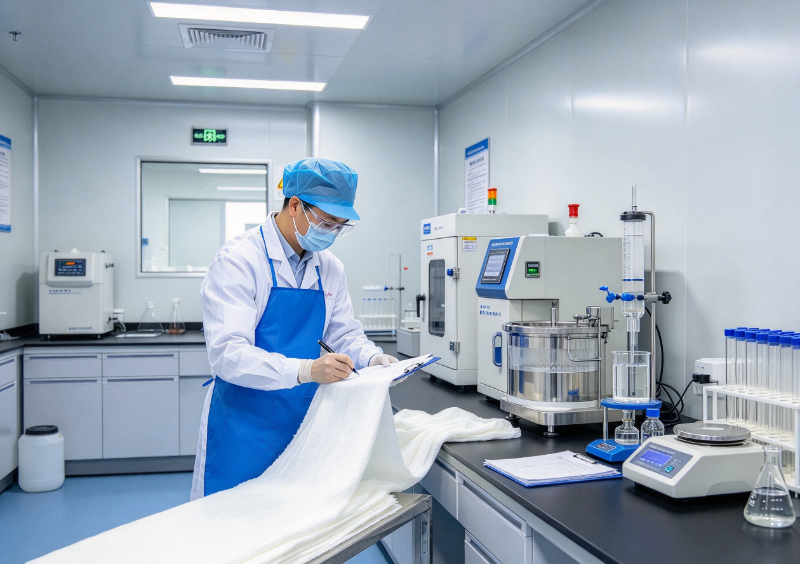
Zezhuang's in-house testing center validates wash durability and batch consistency before shipment.
Frequently Asked Questions About Renewable-Source Water Repellents
How many washes does a renewable-source water repellent last?
A properly cured bio-based DWR typically retains a 70-80 spray rating after 20 home launderings on polyester, nylon, and polyester-cotton blends. Laundering temperature, detergent chemistry, and line drying versus tumble drying shift the results; the rating should be confirmed on the production fabric before a wash-durability warranty is written.
Can bio-based water repellents match fluorocarbon oil repellency?
No. Renewable-source and other non-fluorine chemistries provide excellent water repellency but essentially no oil repellency. Specifications that require AATCC 118 oil repellency grades above 1 still need fluorinated chemistry or a different barrier technology.
What is the difference between fluorine-free and renewable-source water repellents?
Fluorine-free means the formulation contains no fluorinated compounds. Renewable-source means the non-fluorinated polymer itself is derived from biological feedstocks and is verified by ASTM D6866. Every renewable-source water repellent is fluorine-free, but not every fluorine-free product contains renewable feedstock; the terms are related but not interchangeable.
How should a finishing plant budget for renewable-source water repellents?
Renewable-source DWRs carry a modest price premium over conventional non-fluorine systems, but the total cost of ownership includes avoided PFAS testing, simpler compliance documentation, and the ability to quote orders with bio-based content requirements. For mills already certified under sustainability programs, the switch usually reduces compliance overhead.
The Path Forward for PFAS-Free Finishing
Transitioning to a renewable-source DWR is an engineering challenge, not just a chemical swap. The finishing lines that will maintain their competitive edge are those that demand verifiable bio-based content, lock in their curing parameters, and validate wash durability on the actual production fabric.
Hubei Zezhuang Technology Industrial Development Co., Ltd. supports this transition with a decade of experience in textile finishing, dedicated R&D and testing facilities, and production bases in Hangzhou and Jingzhou. If your team requires assistance selecting the right bio-based DWR or interpreting ASTM D6866 test reports, our technical specialists are available to review your fabric specifications. For technical data sheets, samples, or process support, contact us here.